Nuneaton Union Workhouse
Mothering SundayNuneaton Union Workhouse is both a place of refuge and a machinery of confinement in the novel. Its divisions govern the lives of the poor through assigned labor, restricted contact between families, and punishments that leave children vulnerable; for Sunday Small, it is the only home she has known and the institution she later helps expose. The novel also gives it a changed future: testimony to Lady Lavinia Huntley and subsequent oversight are followed by better meals and the removal of the old regime’s atmosphere of fear.
Identity and Layout
The story identifies the setting as Nuneaton Union Workhouse and dates one portion of its narrative to November 1880. The workhouse is divided into four sections: women, boys, girls, and men. This arrangement makes separation a feature of daily life, not simply an occasional consequence of misfortune. Inmates rarely come together except on Sundays, when they are allowed to attend church. Sunday Small has seen how that separation can devastate families, and the institution’s rules place limits on the ordinary closeness that might otherwise help people endure hardship.
The weekly church outing offers a small contrast to enclosure. Walking in file to All Saints Church with Daisy Branning, Sunday hears Daisy delight in the open air, spring flowers, and birds. Sunday envies the birds their freedom. The scene sets the natural world’s unconfined movement against the orderly procession of workhouse residents: even an outing takes place collectively and under institutional routine.
Labor, Food, and Daily Routine
Workhouse life is organized around work as well as separation. Some able-bodied men and stronger boys pick oakum, teasing fibres from old hemp ropes into threads. The product is sold to shipbuilders, who coat it with tar and use it to seal wooden ships. Other men crush bones in a large shed; bones arrive daily from the local slaughterhouse and, once crushed, are sold to farmers as fertilizer. The unpleasant smell coming from the shed tells Sunday what the labor is like. The more fortunate men and boys work in the gardens, growing fruit and vegetables for the residents’ meals.
Women and girls also perform demanding work. In the sewing room, they make workhouse uniforms; skilled needlewomen may sew or repair clothes for better-off parishioners, while others cook, clean, or labor in the laundry. After a meal, Miss Frost reads out the day’s duties, making the allocation of work part of the institution’s recurring routine. The workhouse thus extracts labor from its residents in several forms, with different assignments offering sharply unequal degrees of relief.
The meals Sunday remembers are a separate measure of how official provision differs from residents’ experience. When Lady Lavinia Huntley asks whether the inmates were always adequately fed, Sunday describes dry, grey bread and thick, greasy porridge at breakfast, followed at dinner by soup with pieces of vegetable floating in it. Meat appears usually twice a week, and three times only when they are lucky; even then it is so gristly that it cannot be chewed. The contrast matters because Lady Lavinia has been told that the guardians contribute generously to feed everyone well. Sunday’s account challenges that reassuring picture with the texture and frequency of the food actually served.
Punishment and Separation
The punishment cellar is the most extreme expression of the workhouse’s power over its children. Sunday describes a space below ground containing only a bucket for necessities, with no bed or blanket. Once the door closes, it is completely dark; mice, rats, and spiders run over anyone who falls asleep, and the cellar is cold and damp. Sunday says her longest confinement lasted three days. She received nothing to eat or drink, and when Verity Lockett came to find her, Sunday was so weak that she had to spend the night in the sickbay.
Sunday also recalls two little girls who were locked in the cellar and never seen again. When someone asked Miss Frost where they had gone, Miss Frost said they had died of influenza. Sunday understands that they were buried in the small graveyard behind the workhouse, but cannot remember anyone saying they had received a proper funeral. The account is given as Sunday’s recollection, including the explanation she heard and the uncertainty surrounding the children’s deaths. Its force lies in the way the punishment room’s isolation makes suffering difficult for others to see or verify.
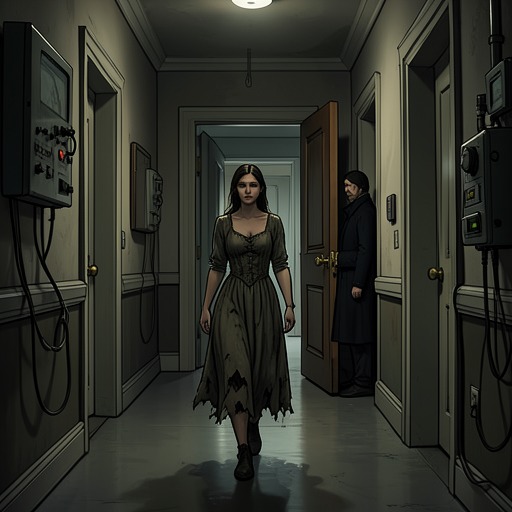
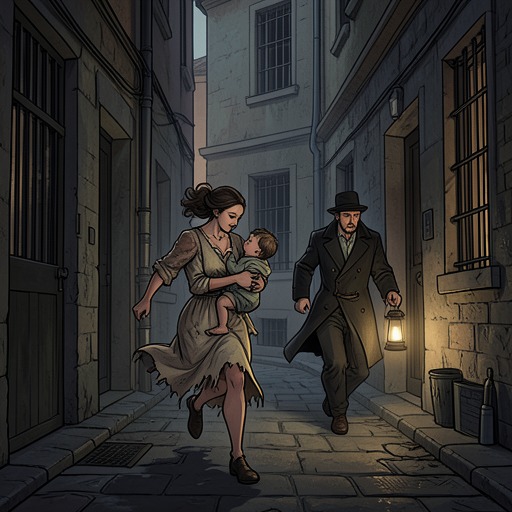
Separation reaches beyond the wards and the cellar. Cissie Burns, who has been made pregnant by Albert Pinnegar, is told she will be sent somewhere pleasant where she can care for her baby. Instead, an asylum carriage arrives through the workhouse’s large wooden gates. Cissie recognizes it as the carriage used to take people to Hatter’s Hall and realizes that the promise has been false. Miss Frost remains impassive as two men advance; Cissie sobs, fights, and is taken away. Sunday, who has lost sight of her friend, later cries for her. The episode shows how the institution’s authority over residents can extend into decisions about their confinement elsewhere, while leaving those they separate behind with little knowledge of what happens next.
Inspection, Departure, and Reform
After leaving the workhouse, Sunday returns as a visitor rather than a resident. At two o’clock, bolts are drawn and visitors file in. She recognizes the floor she once scrubbed on her hands and knees, knowing that the task will now fall to someone else. The changed position gives her a view from outside the routine, but her memories remain specific: they ground her account when Lady Lavinia asks what conditions were really like.
Lady Lavinia brings a notebook and says that what she has seen has disturbed her. She explains that the guardians provide a substantial sum for food, then asks Sunday to confirm whether residents were well fed. No longer living under the institution’s authority, Sunday decides to speak honestly, hoping that doing so may improve life for those still there. Her testimony reaches beyond meals: she describes the cellar, her three-day confinement, and what she knows of the two girls who disappeared. She also recounts Cissie’s assault, pregnancy, and removal to Hatter’s Hall. When Lady Lavinia later presents her findings at a meeting of the guardians, Miss Frost becomes agitated; the account has moved from private suffering into a public inquiry.
The workhouse is not only a place people enter or endure; the novel also marks its residents’ departure. Lady Lavinia completes the paperwork to arrange work for Daisy and Tommy Branning at the Spooners’ home. The children are led to a waiting carriage, where George greets them, and they look back at Nuneaton Union Workhouse for the last time, hoping never to pass through its doors again. Their departure offers a concrete alternative to continued residence, though it does not erase the institution’s hold on their memories.
Later, Verity Lockett reports that meals have improved, the atmosphere is better, and fear and bullying have gone. She says the new matron snapped Miss Frost’s split cane in two and threw it away; she also proposes better bedding, describing the existing blankets as inadequate. These details register reform through everyday objects and conditions rather than through a claim that every problem has been solved. The reported changes follow the inquiry and the removal of the old source of intimidation, while Verity and Lady Lavinia remain concerned with further improvements.
Narrative Significance and Historical Status
Nuneaton Union Workhouse connects several strands of the novel: Sunday’s upbringing, her protective bond with Daisy and Tommy, Cissie’s removal, and the later challenge to Miss Frost’s authority. Its routines make poverty visible as an organized experience, shaped by work assignments, food, confinement, and the division of families. The movement from Sunday’s remembered conditions to her testimony and the later reports of improvement gives the institution a plot of its own: first endured, then described, and finally changed, at least in part.
The novel’s afterword distinguishes the setting from its characters. It states that Nuneaton Workhouse was an actual place, while all the characters, including Miss Frost and Mr Pinnegar, are fictional. The workhouse therefore has a historical referent, but the particular abuses and personal histories presented through its fictional residents belong to the novel. That distinction preserves the setting’s real-world basis without treating its invented characters and events as historical testimony.